There are basically four different types or classes of fire extinguishers, each of which extinguishes specific types of fire. Newer fire extinguishers use a picture/labeling system to designate which types of fires they are to be used on so users can quickly identify the classes of fire on which the extinguisher will be effective.. Older fire extinguishers are labeled with colored geometrical shapes with letter designations. Both of these types of labels are shown below with the description of the different classes of extinguishers.
Also located on the fire extinguisher label is the UL rating. The UL rating is broken down into Class A and Class B:C ratings. These numerical ratings allow you to compare the relative extinguishing effectiveness of various fire extinguishers. For example, an extinguisher that is rated 4A:20B:C indicates the following:
When analyzing these ratings, note there is not a numerical rating for Class C or Class D fires. Class C fires are essentially either a Class A or a Class B fire involving energized electrical equipment where the fire extinguishing media must be non-conductive.
The fire extinguisher for a Class C fire should be based on the amount of the Class A or Class B component.
For extinguisher use on a Class D fire, the relative effectiveness is detailed on the extinguisher nameplate for the specific combustible metal fire for which it is recommended.

Maintenance, inspection, and testing of an extinguisher are the responsibility of the employer.
Maintenance should be done at least annually or more often if conditions warrant. The employer shall record the annual maintenance date and keep these records for one year after the recorded date or the life of the shell of the extinguisher.
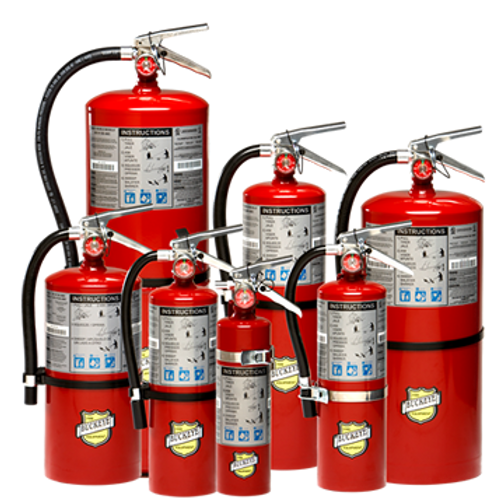
ABC Dry Chemical is a multipurpose extinguishing agent that is suitable for use on Class A, Class B and Class C fires.
Typical Uses: For public areas such as offices, classrooms, churches, parking garages, and hotel/motel assembly halls and guest areas. For businesses such as retail stores, light manufacturing facilities, research facilities, auto dealerships, vehicle/ aircraft/marine service centers, and manufacturing processes such as painting, dipping, and coating.
Not recommended for use on sensitive electronic equipment or aircraft structure.
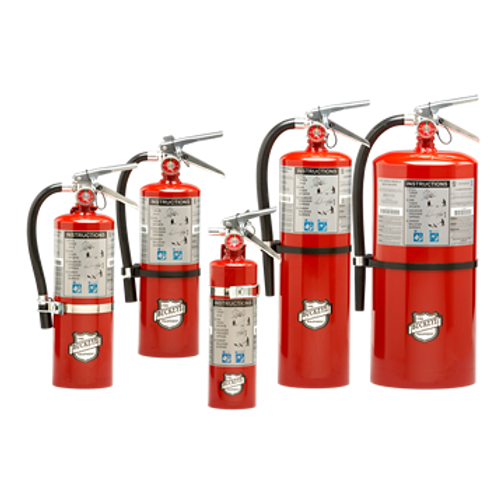
Standard (BC) Dry Chemical is a sodium bicarbonate based extinguishing agent that is suitable for use on Class B and Class C fires.
Typical Uses For flammable liquid hazards in public areas such as offices, classrooms, churches, parking garages, and hotel/motel assembly halls and guest areas. For flammable liquid hazards in businesses such as retail stores, light manufacturing facilities, research facilities, auto dealerships, vehicle/aircraft/marine service centers, and manufacturing processes such as painting, dipping, and coating.
Not recommended for use on sensitive electronic equipment.
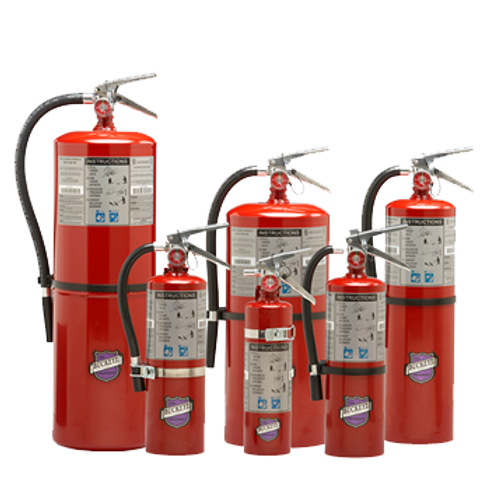
Purple K Dry Chemical is a high performance extinguishing agent most effective for dealing with flammable liquid fires. Purple K is suitable for use on Class B and Class C fires.
Typical Uses For flammable liquid hazards in public areas such as offices, classrooms, churches, parking garages, and hotel/ motel assembly halls and guest areas. For flammable liquid hazards in businesses such as retail stores, light manufacturing facilities, research facilities, auto dealerships, vehicle/aircraft/marine service centers, and manufacturing processes such as painting, dipping, and coating.
Not recommended for use on sensitive electronic equipment.
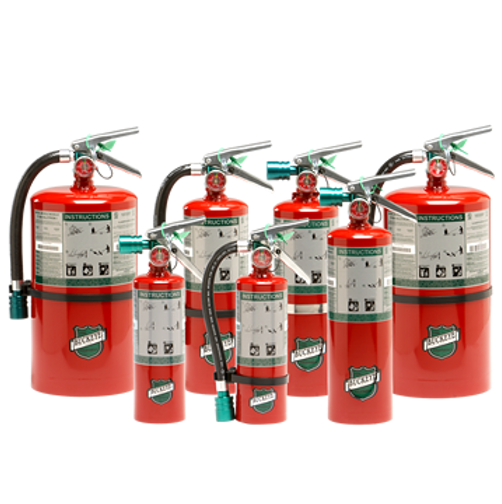
Halotron is a clean, non conductive gaseous agent that is an excellent replacement for Halon 1211 extinguishers. Halotron is suitable for use on Class A, Class B and Class C fires.
Typical Uses: For protecting sensitive electronic equipment in offices, classrooms, churches, parking garages, and hotel/ motel assembly halls and guest areas. For protecting sensitive electronic equipment in businesses such as retail stores, light manufacturing facilities, research facilities, auto dealerships, vehicle/aircraft/marine service centers, and manufacturing processes such as painting, dipping, and coating.
Recommended for use on sensitive electronic equipment.
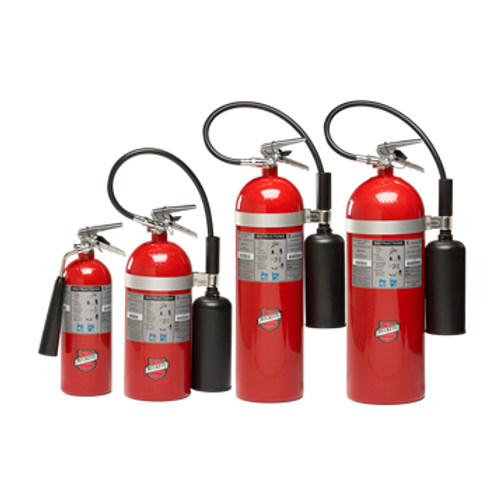
Carbon Dioxide is the trusted non-conductive clean agent and is most effective for dealing with electronic equipment fires. CO2 is suitable for use on Class B and Class C fires.
Typical Uses: For protecting sensitive electronic equipment in offices, classrooms, churches, parking garages, and hotel/ motel assembly halls and guest areas. For protecting sensitive electronic equipment in businesses such as retail stores, light manufacturing facilities, research facilities, auto dealerships, vehicle/aircraft/marine service centers, and manufacturing processes such as painting, dipping, and coating.
Recommended for use on sensitive electronic equipment.
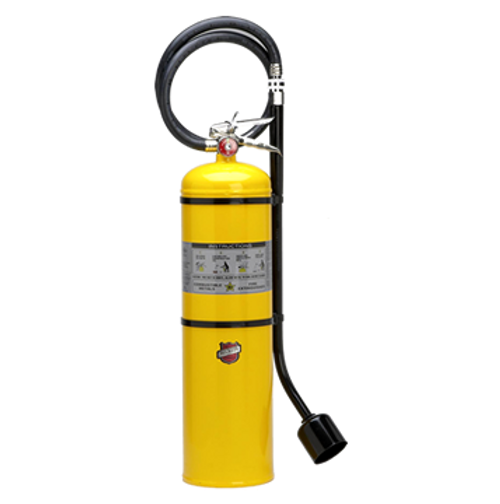
Specifically designed for use on combustible metal fires, this extinguisher features a discharge assembly that keeps the operator at a safe distance while providing accurate application of the agent on the fire. From the heat of the fire, the sodium chloride based agent forms a crust to exclude air from the burning material. Suitable for use on Class D fires such as those involving magnesium, sodium, potassium and sodium-potassium alloys. There is data showing that zirconium, uranium, titanium, and powdered aluminum fires can be controlled and extinguished with this unique extinguisher.
Typical Uses: Metal production and machining operations.
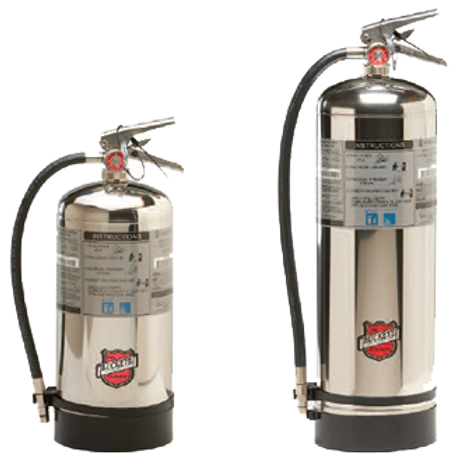
Wet Chemical extinguishers contain a blend of Potassium Acetate and Potassium Citrate that is extremely effective in suppressing high temperature fires involving cooking oils and grease. The units incorporate a spray nozzle that ensures the agent is applied gently to the burning oil thus preventing splashing. It’s unique cooling properties deliver exceptional heat absorption ensuring the fire remains out. Wet Chemical is suitable for use on Class A and K fires.
Typical Uses: For protecting cooking oil and grease fires in commercial kitchens. This extinguisher is designed to complement existing pre-engineered hood systems.