
Restaurant Fire Suppression System Discharged? What to Do Before Reopening
Did your restaurant hood fire suppression system discharge? Learn what to do immediately, why the gas shut off, and how professional service helps restore protection.
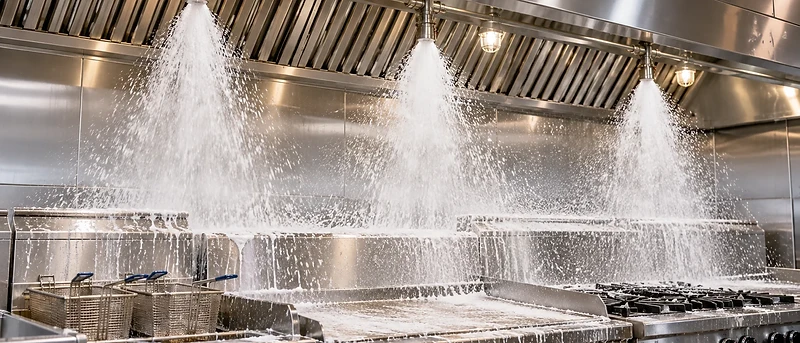
A commercial kitchen fire suppression system discharge can bring restaurant operations to an immediate stop. Whether the system activated during a cooking fire or discharged unexpectedly, the priority is protecting people, making the scene safe, and having the system evaluated before cooking resumes. This guide explains the next steps for restaurant owners and managers in Southern California.
If the system has already discharged and you need professional assistance, see our kitchen fire suppression repair services or request service.
What Should You Do Immediately After a Fire Suppression System Discharges?
- If a fire is active or you suspect a fire, alert everyone, evacuate the affected area, and call 911. Follow emergency responders' instructions.
- Do not attempt to fight a growing fire, enter a smoke-filled kitchen, or assume the fire is out merely because the suppression system discharged.
- Keep the protected cooking equipment shut down. Do not restart burners, fryers, or other appliances until the kitchen and system have been evaluated and cleared for use.
- Do not bypass or manually defeat the gas shutoff, electrical interlocks, detection components, or pull station to resume cooking.
- Contact the fire department or other local authority as required, and arrange an inspection by a qualified fire suppression service contractor.
- Document the incident, including the approximate time, affected appliances, and any instructions from emergency responders. Notify your insurance carrier when appropriate.
Why Did the Gas Shut Off When the Kitchen Suppression System Activated?
Commercial kitchen fire suppression systems commonly incorporate fuel shutoff and, where applicable, electrical interlocks. When the system activates, these features are intended to interrupt the heat source for protected cooking equipment. The specific sequence depends on the system design and installation.
A gas valve that closed during activation is not necessarily broken. It may have performed its intended safety function. Resetting or bypassing the valve without correcting the cause of activation and restoring protection can create a serious hazard. A qualified technician should inspect the entire system and associated interlocks before service is restored.
Does the System Need to Be Recharged After It Discharges?
A discharged wet-chemical system normally requires professional servicing before it can be returned to service. Depending on the manufacturer and system configuration, restoration may involve evaluating the agent cylinder, restoring the correct extinguishing agent charge, replacing required actuation components, inspecting piping and nozzles, checking detection and manual-release components, and function-testing the necessary shutoff arrangements.
The service work is system-specific. A restaurant should not assume that merely refilling a cylinder or reopening a gas valve makes the kitchen protected again. Professional commercial kitchen suppression service helps determine what is needed.
What If the System Discharged Without a Fire?
An unexpected discharge still requires a professional assessment. Possible contributing factors can include an issue with a detection or actuation component, accidental operation of the manual pull station, damage, or other system-specific conditions. The cause should be investigated rather than guessed.
Do not reconnect appliances, manipulate release cables, or attempt a do-it-yourself reset. Keep the affected cooking equipment out of service until a qualified professional evaluates the system.
Can a Restaurant Reopen After a Suppression System Discharge?
Reopening depends on more than whether the visible fire is out. Before protected cooking resumes, the restaurant may need to address fire damage, cleanup, equipment safety, suppression-system restoration, gas and electrical conditions, and any requirements imposed by the local fire department, health authority, or other authority having jurisdiction.
The required approvals can vary with the incident and location. A suppression service tag alone does not automatically establish that the entire restaurant is approved to reopen. Coordinate with the appropriate authorities and qualified service providers.
What Does Emergency Kitchen Fire Suppression Repair Involve?
A technician first evaluates the system type, the extent of discharge, and the condition of the protected cooking line. Depending on the findings, the work may involve:
- Identifying the system manufacturer and model, including an Ansul R-102 where applicable
- Evaluating the cylinder, wet-chemical agent, and required recharge or replacement
- Inspecting release mechanisms, cartridges, fusible links, cables, and manual pull stations as applicable
- Checking piping, nozzles, and protection for the current appliance arrangement
- Evaluating associated gas shutoff and electrical interlocks
- Completing applicable testing, tagging, and service documentation after proper restoration
Parts availability, system condition, and the work needed affect how quickly a system can return to service. No responsible contractor can promise that every discharged system will be restored immediately.
Ansul R-102 and Other Restaurant Suppression Systems
Xclusive Fire Protection services commercial kitchen systems including Ansul, Amerex, Buckeye, Pyro-Chem, Range Guard, and other supported systems. An Ansul R-102 system has manufacturer-specific service requirements, so repairs and restoration must follow the applicable instructions. Learn more about our Ansul fire suppression system service.
We service these systems; we do not claim to be an authorized manufacturer distributor. If an older or altered system cannot be restored to a compliant condition, additional corrective work or an upgrade may be necessary.
How Can You Reduce the Risk of Future Shutdowns?
Keep up with required routine maintenance, and have the protection evaluated after changing or moving cooking appliances. Many commercial kitchen wet-chemical suppression systems require professional inspection at least every six months, subject to applicable requirements. See our guide on how often restaurant hood suppression systems need inspection.
Make sure staff know where the manual pull station is and understand the restaurant's emergency response procedures. Train employees not to bypass safety interlocks.
Frequently Asked Questions
Can I turn the gas back on myself after the fire suppression system goes off?
Do not bypass or reset a safety shutoff to restart protected cooking equipment. Have the system and connected equipment evaluated by qualified professionals, and follow any directions from the fire department or local authority.
Is a fire suppression system discharge always caused by a fire?
No. A discharge can also occur because of accidental activation or a problem requiring investigation. Treat every activation seriously until the cause is established and the system is properly restored.
How long does a kitchen fire suppression recharge take?
It depends on the system, discharge condition, required parts, testing, and whether repairs are needed. A qualified service contractor can estimate timing after inspecting the equipment.
Do I need a fire department inspection before reopening?
It depends on the incident and local authority requirements. If emergency responders or an inspector give instructions about reopening, follow them. Ask the relevant authority what approval is needed.
Emergency Restaurant Fire Suppression Service in Southern California
Xclusive Fire Protection is a California C-16 Fire Protection Contractor (CSLB License #1013330) providing commercial kitchen fire suppression inspection, maintenance, and repair across Los Angeles County, Ventura County, and Orange County, including the San Fernando Valley and San Gabriel Valley.
For urgent suppression-system problems, call (818) 206-3355 or toll-free (877) 335-8880 to discuss availability. Emergency service requests can be made 24/7; response times and repair completion depend on technician availability, the system condition, and required parts.
If you have an active fire or immediate danger, call 911 first. For suppression-system service, contact Xclusive Fire Protection.
Ready to schedule service?
Call us or request service online and we'll help keep your kitchen compliant, protected, and ready for inspection.